Politics
Congress Faces Organisational Hurdles Ahead of 2027 Uttarakhand Assembly Election
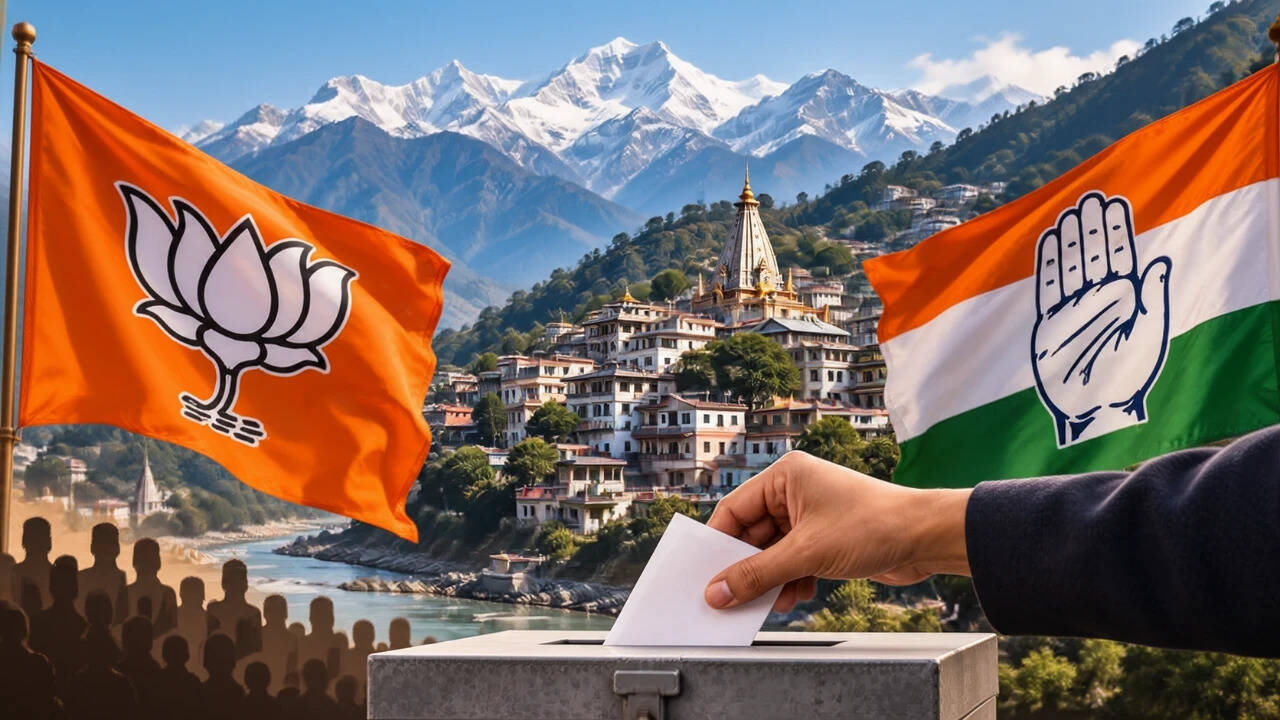
Congress is entering the 2027 Uttarakhand assembly election with growing voter support but significant organisational and leadership challenges that threaten to undermine its ability to convert anti‑incumbency into a credible alternative. The BJP, led in the state by Chief Minister Pushkar Singh Dhami, is seeking a historic third consecutive term. At a recent event in Dehradun, Union Home Minister Amit Shah set an ambitious target of winning more than 65 of the state’s 70 assembly seats. Congress hopes to capitalise on dissatisfaction with the government and return to power after a decade in opposition.
Since Uttarakhand’s formation in 2000, the state’s first four assembly elections saw a change of government every five years. Congress won 36 seats in 2002, the BJP 35 in 2007, Congress 32 to the BJP’s 31 in 2012, and the BJP 57 seats in 2017. The 2022 election broke this pattern, with the BJP winning 47 of 70 seats and becoming the first party to secure consecutive terms. Congress improved from 11 seats in 2017 to 19 in 2022, and its vote share rose from about 33.5 % to nearly 38 %.
The 2024 Lok Sabha election reinforced the BJP’s dominance, with the party winning all five parliamentary constituencies in Uttarakhand. Congress trailed in 63 of the state’s 70 assembly segments, including 14 of the 19 constituencies it had won in 2022.
Following the Lok Sabha defeat, the Uttarakhand Pradesh Congress Committee tasked former minister Nav Prabhat with assessing the party’s performance. The preliminary review identified infighting, poor communication and a lack of coordination among party leaders—issues that have resurfaced in similar reviews after the 2014, 2019, 2017 and 2022 elections.
Harish Rawat remains one of Congress’s most recognisable figures in Uttarakhand, but his prominence has been linked to internal power struggles. Rawat was overlooked for the chief minister’s post in 2002, and after the party returned to power in 2012, a 2016 crisis saw nine MLAs rebel against his government, triggering President’s Rule and a prolonged political and legal battle. Several rebels later joined the BJP.
Controversy involving Gaurav Kumar, an alleged conman posing as Rahul Gandhi’s private secretary, exposed tensions within the state unit. Bhavna Pandey alleged that Kumar demanded Rs 2–3 crore, claiming the central leadership wanted state president Ganesh Godiyal replaced. Godiyal alleged a conspiracy, while Rawat denied any political plot and called for a police probe. Personal rivalries, including Rawat’s falling‑out with former aide Ranjeet Rawat, have added to the uncertainty.
Congress has highlighted women’s safety and accountability as central to its criticism of the government. Garima Mehra Dasauni, the party’s chief spokesperson in Uttarakhand, said Congress has compiled a list of alleged crimes against women involving senior BJP leaders. She also argues that the BJP’s electoral success cannot be understood simply through its development claims; religious and communal mobilisation, alongside welfare measures, has helped the party consolidate support.
The BJP’s advantage lies in its organisational strength, the appeal of Prime Minister Modi, CM Dhami’s ground work and the promise of continuity through a double‑engine government. The party seeks to retain a broad social coalition while appealing to women, young voters, ex‑servicemen and the Sikh community. It has reported plans for younger candidates and greater emphasis on local feedback.
Political scientist Hilal Ahmed notes that Congress raises many issues but lacks a coherent narrative that ties them together. He warns that the party’s response to the BJP remains fragmented rather than forming a constructive critique, and predicts that “BJP might not win but neither will Congress.”
The Dhami government’s record offers Congress several openings: the Ankita Bhandari case, alleged VIP angle, recruitment paper leaks, unemployment, migration, land rights and corruption allegations. However, identifying these vulnerabilities is easier than turning them into electoral support. Congress must show how it would address concerns over employment, regional inequality and protection of local land rights.
Congress is preparing through leadership meetings, multiple Parivartan Yatras, village outreach and a campaign against the government’s record. The party faces three key questions: who will lead the party in Uttarakhand, what political alternative it will present, and whether it can rebuild its organisation.
The 2027 election will test whether Congress can demonstrate a clear understanding of itself and its electoral opponent while offering a compelling alternative to the BJP’s incumbency advantage.