World
India Balances Quad, China, and Trump‑Shaped Summits Amid Complex Diplomacy
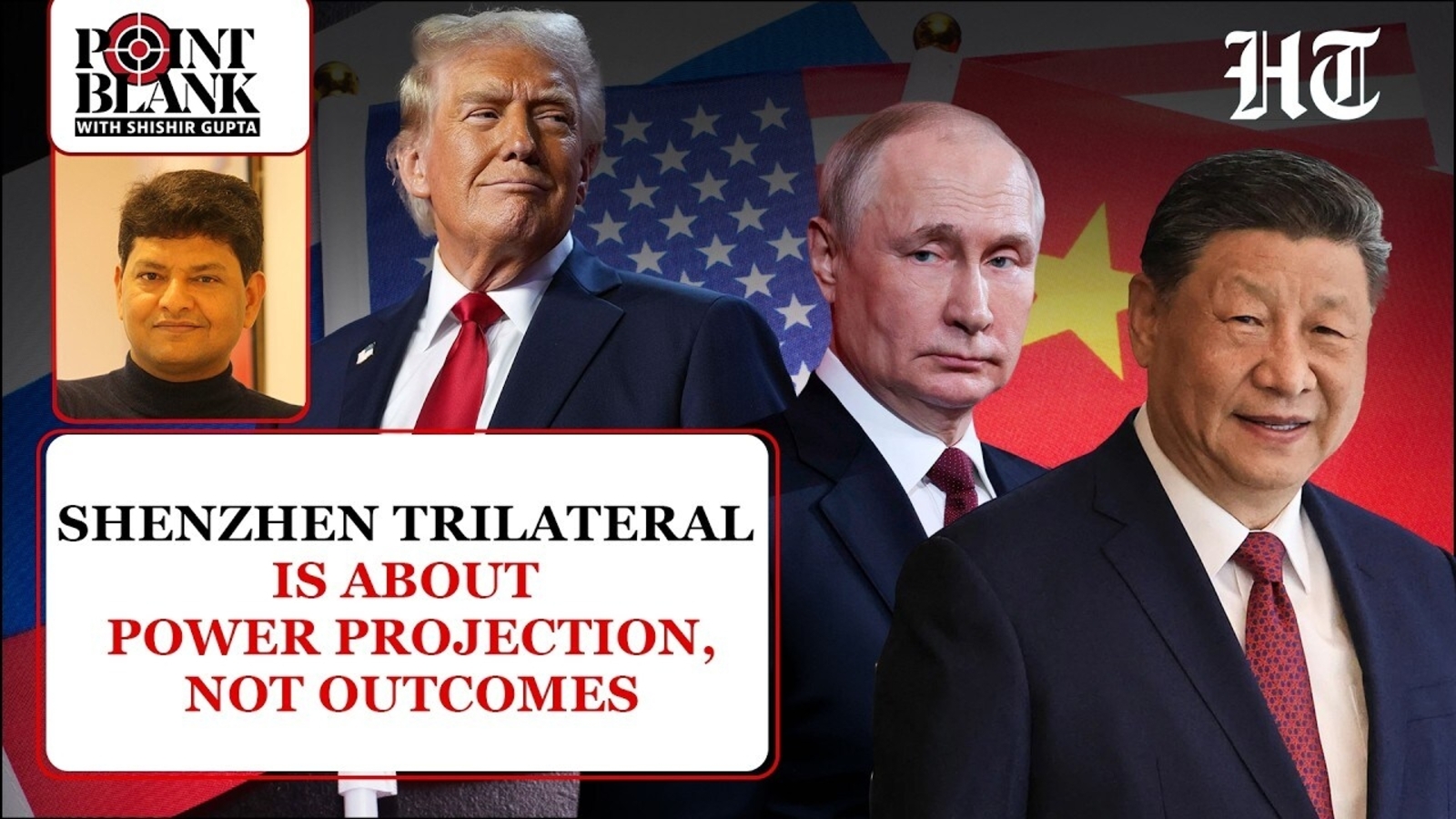
India faces a crowded diplomatic calendar, with an upcoming Quad leaders’ meeting in Manila and a proposed summit in Shenzhen involving Donald Trump, Vladimir Putin and Xi Jinping. Executive Editor Shishir Gupta, speaking on Point Blank, explained that India must deepen useful partnerships while preserving its freedom to make independent decisions. He said the Quad, comprising India, the United States, Japan and Australia, should move beyond meetings to produce tangible outcomes such as alternative supply chains, critical‑mineral cooperation and disaster relief. Gupta highlighted China’s expanding maritime reach and the need for the Quad to reassure countries under Chinese pressure and support freedom of navigation in the South China Sea. He noted that the Quad’s significance varies for its members: Australia is concerned about Chinese influence in the Solomon Islands and submarine activity in the southern Indian Ocean, while Japan and Southeast Asian states face more immediate military pressure. Gupta also discussed the proposed Shenzhen meeting, describing it as a gathering of three leaders with different strategic aims. Russia seeks greater scope to negotiate European security with Washington and reduce dependence on Beijing; the United States aims to draw China into nuclear‑weapons‑reduction talks; China wants to project Xi as a central figure. He cautioned that the spectacle of the meeting does not guarantee substantive outcomes. For India, the analysis implies that relationships cannot be read as fixed blocs; shifts in Washington’s dealings with Moscow could alter pressures on New Delhi, even as competition with Beijing continues. Gupta also touched on India’s emerging role as a defence supplier, noting Southeast Asian interest in BrahMos missiles as a deterrent against Chinese maritime pressure. He described the Philippines’ interest in additional batteries and potential arrangements with Indonesia and Vietnam, while acknowledging Russian concerns about protecting jointly developed technology. Gupta rejected reports of problems with Philippine BrahMos systems, calling them Chinese propaganda. On India‑US ties, he identified trade negotiations and differences over Russian energy purchases as key friction points. He said a possible trade agreement is at an advanced stage but cautioned that unresolved issues could prevent a deal. Gupta concluded that India should pursue strategic autonomy backed by active diplomacy, working with partners where interests converge, preserving independent judgment and remaining ready to adjust.
Frequently asked questions
When and where is the Quad leaders' meeting scheduled?
The Quad leaders' meeting is scheduled in Manila.
Who are the participants of the proposed summit in Shenzhen?
The proposed summit in Shenzhen involves Donald Trump, Vladimir Putin, and Xi Jinping.
What are India's key priorities in its relationship with the Quad?
India aims to deepen useful partnerships, produce tangible outcomes such as alternative supply chains, critical‑mineral cooperation, and disaster relief, while preserving strategic autonomy.