World
China Resists Inclusion in US‑Russia Nuclear Treaty, Citing Size Disparity and Strategic Autonomy
By Urooba Jamal
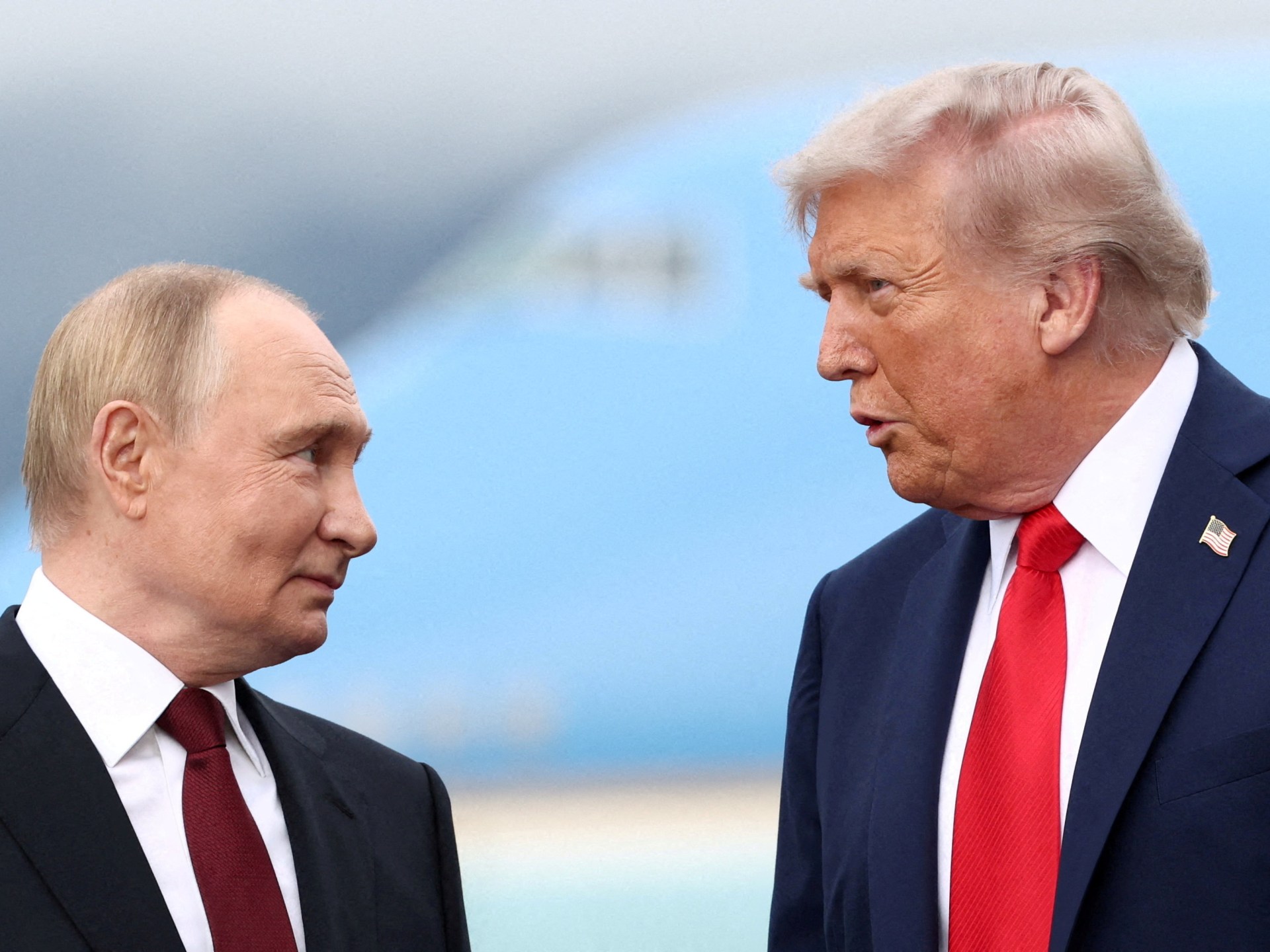
Beijing has a smaller nuclear arsenal than Washington and Moscow and fears that a new treaty could limit its capabilities. The United States, Russia and China are set to hold their first trilateral meeting as President Donald Trump pushes for a new arms‑control agreement. Trump will meet President Xi Jinping and President Vladimir Putin on the sidelines of the APEC summit in Shenzhen, China, the White House confirmed. The main topic for Washington and Moscow is the New Strategic Arms Reduction Treaty (New START), which expired in February after its five‑year extension lapsed. Trump had rejected Russia’s proposal to extend the treaty and demanded a “new, improved and modernised” deal that would include China.
New START, signed in 2010 by President Barack Obama and Russian President Dmitry Medvedev, capped each side at 1,550 strategic warheads, 700 long‑range missiles and bombers, 800 intercontinental ballistic missiles in deployment, and allowed up to 18 annual inspections of strategic sites. The treaty was extended in 2021 under President Joe Biden. Earlier agreements—START I (1991), START II (1993, never enforced), and the Strategic Offensive Reductions Treaty (2003‑2011)—also limited U.S. and Russian arsenals. The COVID‑19 pandemic and Russia’s 2022 invasion of Ukraine ended on‑site inspections, leaving the two powers to rely on intelligence.
The U.S. believes a bilateral treaty would no longer reflect the global nuclear balance. Under Secretary of State for Arms Control Thomas DiNanno, the U.S. said “to have true arms control in the 21st century, it’s impossible to do something that doesn’t include China because of their vast and rapidly growing stockpile.” Secretary of State Marco Rubio echoed that a treaty must address all Russian weapons and China’s growing arsenal.
China’s reluctance stems largely from the disparity in warheads. According to the Stockholm International Peace Research Institute (SIPRI), China has about 620 warheads, far below the 800 cap for each of the U.S. and Russia, which each possess more than 5,000. While the U.S. has retired a third of its warheads and Russia a little less than a quarter, China’s arsenal is growing fastest, adding roughly 100 new warheads a year since 2023. In February, when New START expired, Chinese officials said China would not participate in disarmament negotiations because its forces are not on the same level as those of the United States and Russia.
Professor Zhao Minghao of Fudan University explained that China’s declared no‑first‑use policy and “minimum deterrence” posture mean its arsenal is already restrained by doctrine. A U.S.–Russia–China treaty would cap its forces while imposing intrusive verification on a comparatively small force. He also cited a credibility problem, noting Washington’s withdrawal from other arms‑control agreements such as the Anti‑Ballistic Missile Treaty and the Intermediate‑Range Nuclear Forces Treaty.
Sun Chenghao of Tsinghua University added that China’s smaller arsenal and concerns about U.S. missile defenses, precision‑strike capabilities and emerging technologies reduce the appeal of a treaty that limits its forces while leaving those concerns unaddressed.
William Yang of the International Crisis Group said Beijing sees any treaty as a mechanism to limit its nuclear modernization, preferring strategic autonomy to expand its arsenal and modernize defense capabilities. Alejandro Reyes of the University of Hong Kong noted China’s rapid expansion raises questions about where it intends to stop, but he cautioned against assuming China seeks parity.
Analysts say China would consider a trilateral framework only after the U.S. and Russia reduce their arsenals toward genuine parity. Zhao suggested a gradual approach involving sustained U.S.–China strategic stability dialogue, test moratoria, data exchanges and exercise notifications. Sun argued that differentiated obligations and phased verification would be more workable than identical reductions, and that discussions should also cover missile defense, advanced conventional weapons and emerging technologies. Reyes emphasized that an agreement would need to accommodate different levels of nuclear capability rather than insist on identical ceilings.
The fundamental obstacle is political trust. Each side views its own nuclear capabilities as defensive while seeing the others’ modernization programs as potentially threatening, which can encourage an arms race even when no side wants one. With the Ukraine war, tensions over Taiwan and U.S. military deployments in the Asia Pacific, a formal treaty is unlikely in the near term. Zhao said the most likely outcome is informal restraints while formal arms control waits for a geopolitical thaw that this decade is unlikely to deliver.
Frequently asked questions
What limits were set by the New START treaty?
The New START treaty capped each side at 1,550 strategic warheads, 700 long‑range missiles and bombers, 800 intercontinental ballistic missiles in deployment, and allowed up to 18 annual inspections of strategic sites.
How many nuclear warheads does China have compared to the United States and Russia?
China has about 620 warheads, far below the 800‑warhead cap for each of the United States and Russia, which each possess more than 5,000 warheads.
Why does China resist inclusion in a new US‑Russia nuclear treaty?
China’s reluctance stems from its smaller arsenal, concerns that a treaty would impose intrusive verification on a comparatively small force, and a desire for strategic autonomy to modernize its nuclear capabilities.